



Three Finishing Techniques That Make Your Leather Armor Look Like Real Craftsmanship


Even if you’re just starting out, these three skills will separate your work from the crowd, and they cost almost nothing to learn.
There’s a moment every leatherworker recognizes, the one where you’ve cut and shaped all your pieces but something still looks unfinished. The armor sits there, technically complete yet somehow raw. That gap between “done” and “crafted” almost always comes down to finishing. Most beginners skip it. The experienced ones never do.
In this guide, we’ll walk you through three foundational finishing techniques: edge grooving, burnishing, and stamping. These will immediately elevate the look of any leather armor project, no matter your skill level.
✦ Technique 01
Edge Grooving
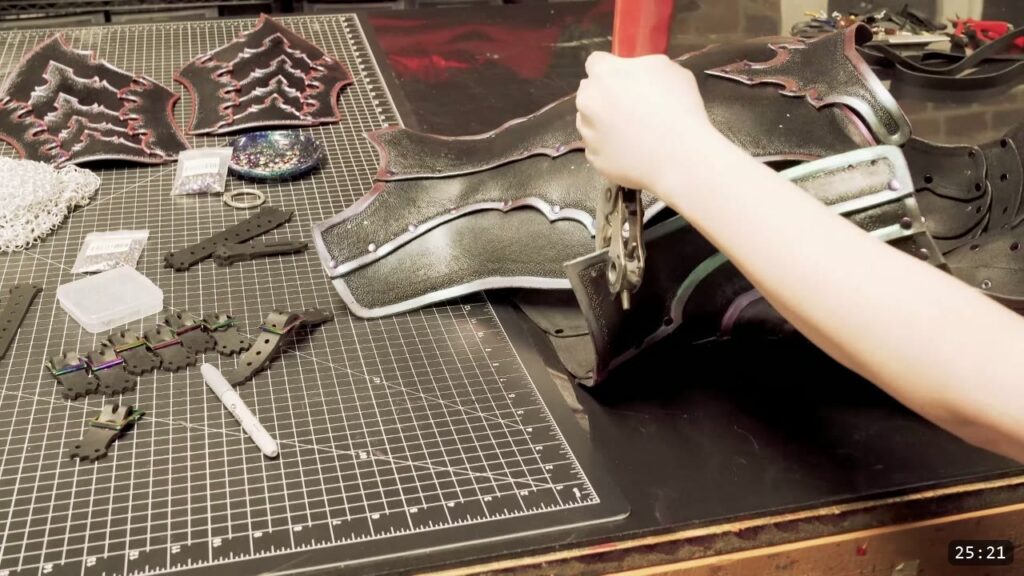
Before anything else, pick up a channeler and run it along the border of every piece. This single step frames the leather and gives the entire build a clean, intentional look that immediately reads as professional.
Edge grooving creates a recessed line just inside the edge of the leather. It serves two purposes. Visually, it draws the eye along the contour of each panel, giving the piece clear definition. Structurally, it also helps guide stitching when you reach that stage, keeping your thread lines straight and even.
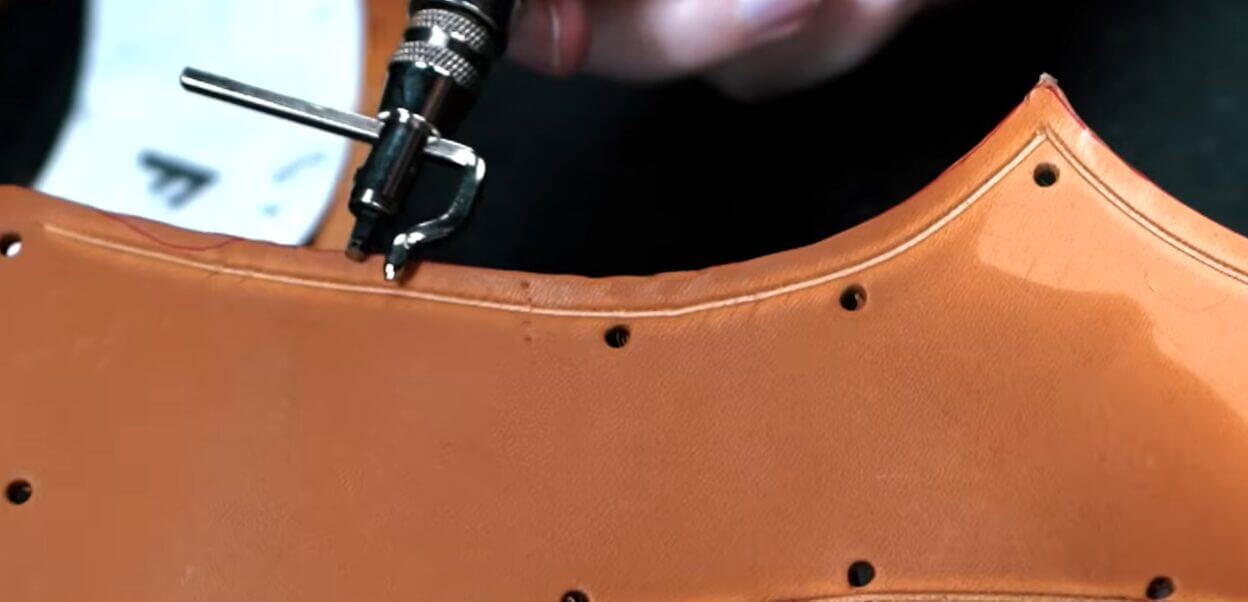
Think of it like the difference between a painting with a frame and one leaned against a wall. The groove tells the viewer exactly where your piece begins and ends. It signals that you’ve thought about the design, not just the construction.
Pro Tip:
Apply consistent, even pressure as you run the channeler, and keep the tool angled slightly inward. A single confident pass is better than two hesitant ones.
✦ Technique 02
Burnishing
Every visible edge of your armor deserves a quick burnishing pass. The tools you need are simple: water and a slicking tool. The principle is just as simple. Wet the edge, work it with the slicker, and watch the raw fiber transform into a smooth, rounded surface.
Raw leather edges are fibrous and porous. Left untreated, they catch on things, fray over time, and look unfinished. A burnished edge, by contrast, looks polished and refined. More importantly, it looks intentional.
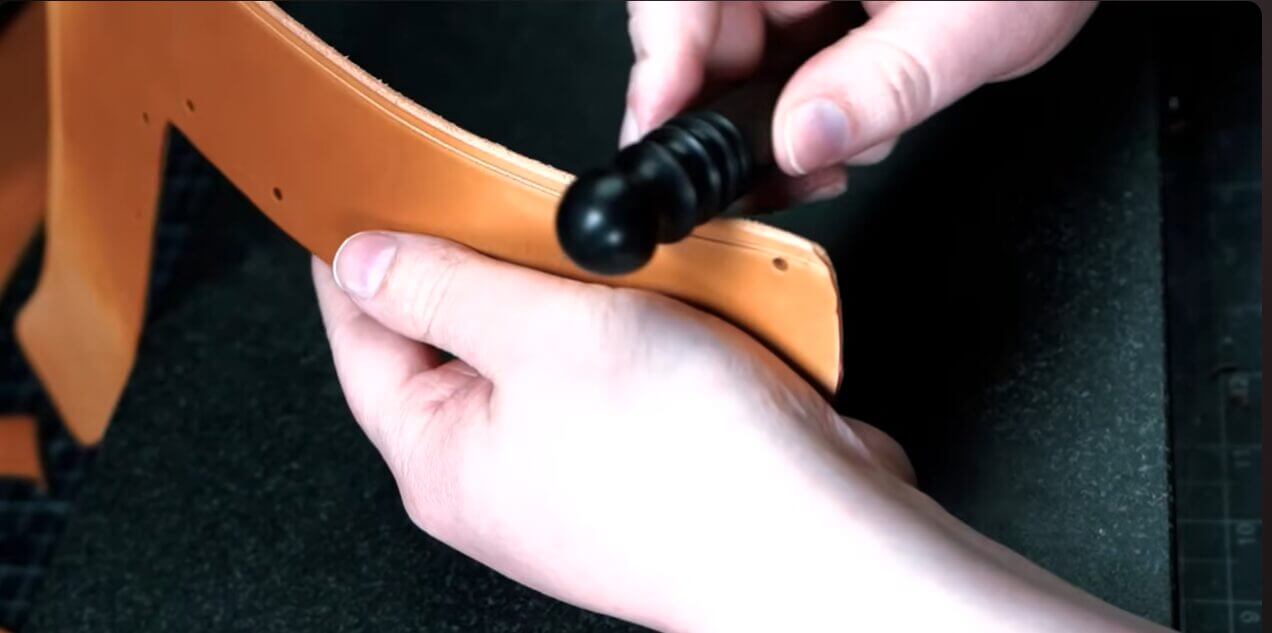
The cleaner the edge, the more refined the piece looks overall. It is one of those details viewers notice without knowing why.
For armor that will see real use or heavy display, you can also apply a small amount of beeswax or a commercial edge finish before slicking. This seals the leather fiber more permanently and adds an extra layer of durability.
Pro Tip:
Dampen the edge with just enough water to darken it slightly. Too little and the fibers will not compress. Too much and you risk over-stretching the leather.
✦ Technique 03
Stamping
Decorative stamping is where functional leatherwork becomes wearable art.
Here’s the secret most beginners do not hear early enough. You do not need a huge collection of stamps to make your work look extraordinary. One stamp, used well, is enough.
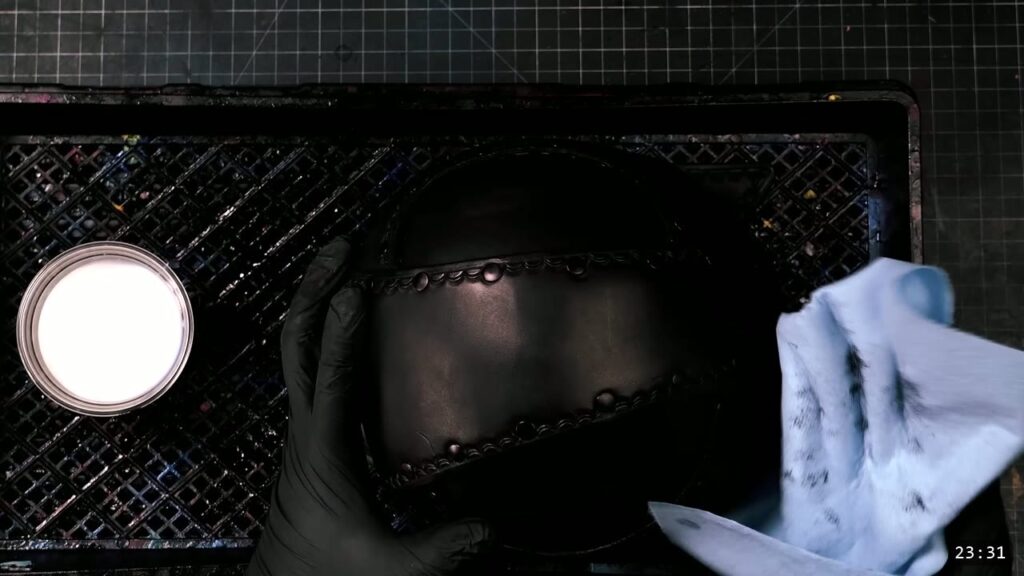
Start with a crescent stamp. Run it along the border of your pieces in a repeating pattern. Keep it evenly spaced and consistently angled. This single motif, repeated with intention, creates a visual rhythm that unifies every panel of your armor.
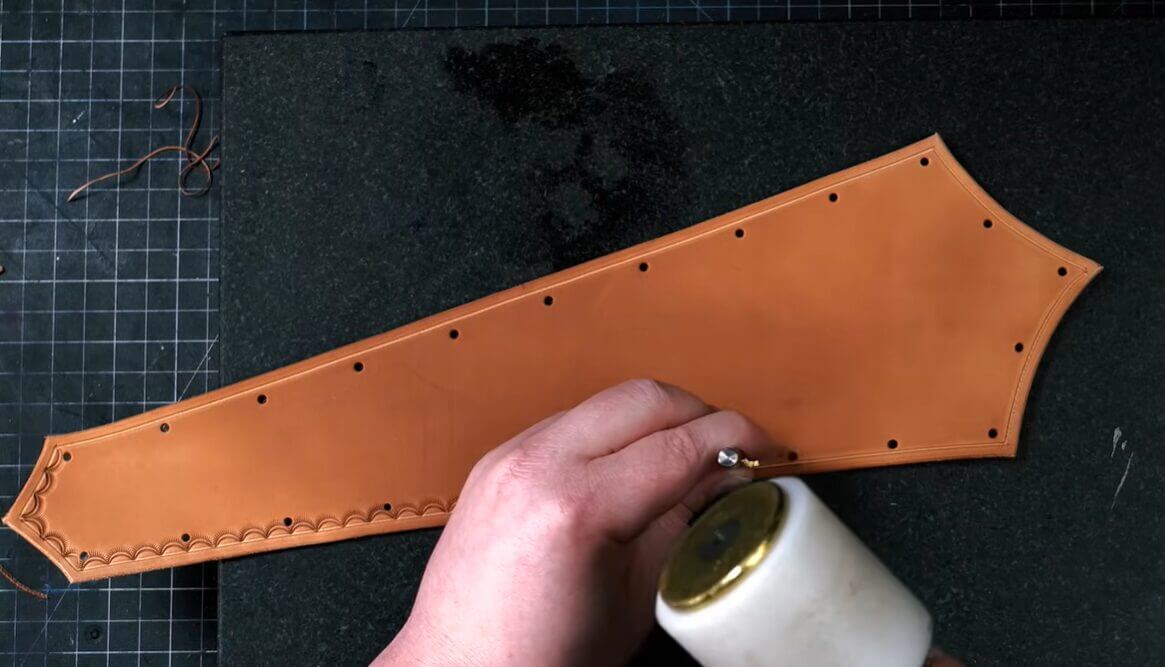
It transforms something that looked raw into something that looks made.
As you grow more confident, you can layer stamps, experiment with spacing, or work inward toward the center of larger panels. Even at the most basic level, a clean border stamp shows that you know what you are doing.
Pro Tip:
Case your leather by dampening it evenly before stamping. Dry leather will not hold an impression. Properly cased leather retains crisp, sharp detail that lasts for decades.
✦ Final Thoughts
Mastery in leatherworking is not about having the most tools or the most experience. It is about understanding that every decision you make, right down to the last inch of edge, is a statement about your work.
Edge grooving, burnishing, and stamping are three of the simplest statements you can make. They are also three of the most powerful.
Start with these. Build the habit. Watch what happens to your builds.


Responses